Amazon is advancing a new key element in its
satellite internet strategy . After years of development
under the name Project Kuiper , the group is now adopting an identity designed for the general public:
Amazon Leo .
This change accompanies a rise in technical and commercial capabilities, and brings the initiative closer to an anticipated launch, particularly in France…
Launched seven years ago, Project Kuiper was based on a code name inherited from the company’s early engineering phases. As stated in
Amazon’s press release , the choice of this new name reflects a
desire to reach a wider audience .
With Amazon Leo, the company highlights an evocative acronym: LEO for Low Earth Orbit , which refers to the low Earth orbit where its satellites operate, at an altitude of approximately 600 kilometers.
This constellation already comprised over 100 satellites, and 150 at the time of the announcement, according to Andy Jassy . Amazon ultimately aims for 3,236 devices, half of which should be deployed by summer 2026. After numerous delays, the team is now claiming technical advancements, including speeds exceeding 1 Gbps .
A deliberate alternative to Starlink
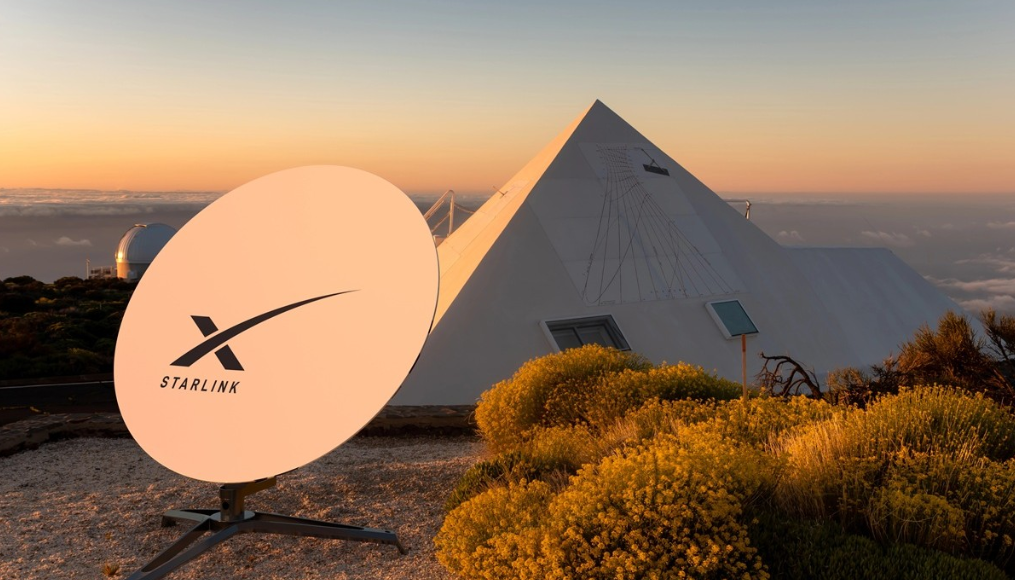
The comparison with Starlink is inevitable, even though SpaceX has a considerable lead , with more than 10,000 satellites in orbit and a well-established global presence.
Amazon makes no secret of it: Leo aims to become its most serious rival . On paper, both services offer high-speed internet access from anywhere in the world, but Amazon intends to distinguish itself through the quality of its antennas, with models offering speeds of 100 Mbps , others of 300 Mbps , or even more than 1 Gbps for the most demanding uses.
The market is now becoming strategic: Starlink is already equipping commercial aircraft, collaborating with telecom operators to extend mobile coverage, and offers a wide range of terrestrial antennas. Amazon, for its part, is preparing the integration of Leo into its vast ecosystem, including the AWS cloud and its logistics activities , while aiming to reach 500 million homes and numerous organizations worldwide.
Towards a commercial launch in France?
While Amazon hasn’t yet announced an official release date, the company confirms that Leo is heading towards an imminent launch. All signs point to availability around the end of this year or the beginning of 2026.
France would also be among the first territories ready to host the service, after the authorization granted by Arcep.